A software developer who is particularly good at turning strong design and business requirements into finished products.
WalkFully
- My role
- Shopify developer, at Lumios Digital. This store extends Haven, a commercial base theme, rather than starting from an empty one, and my job was everything built on top of it.
- What I delivered
- 18 sections, 9 snippets and 4 templates, roughly 19,000 lines added across 60 files: an interactive science explorer, field notes, a journal, a customer gallery, programme pages and direct Klaviyo capture.
- Why it mattered
- The category has to be taught before it can be sold, so the budget went into the argument for the product rather than into rebuilding commerce. New sections use the base theme’s own conventions, so a merchant editing the store cannot tell where the seam is.
- Current status
- Live and selling. Built at Lumios Digital between January and July 2026.
Scope
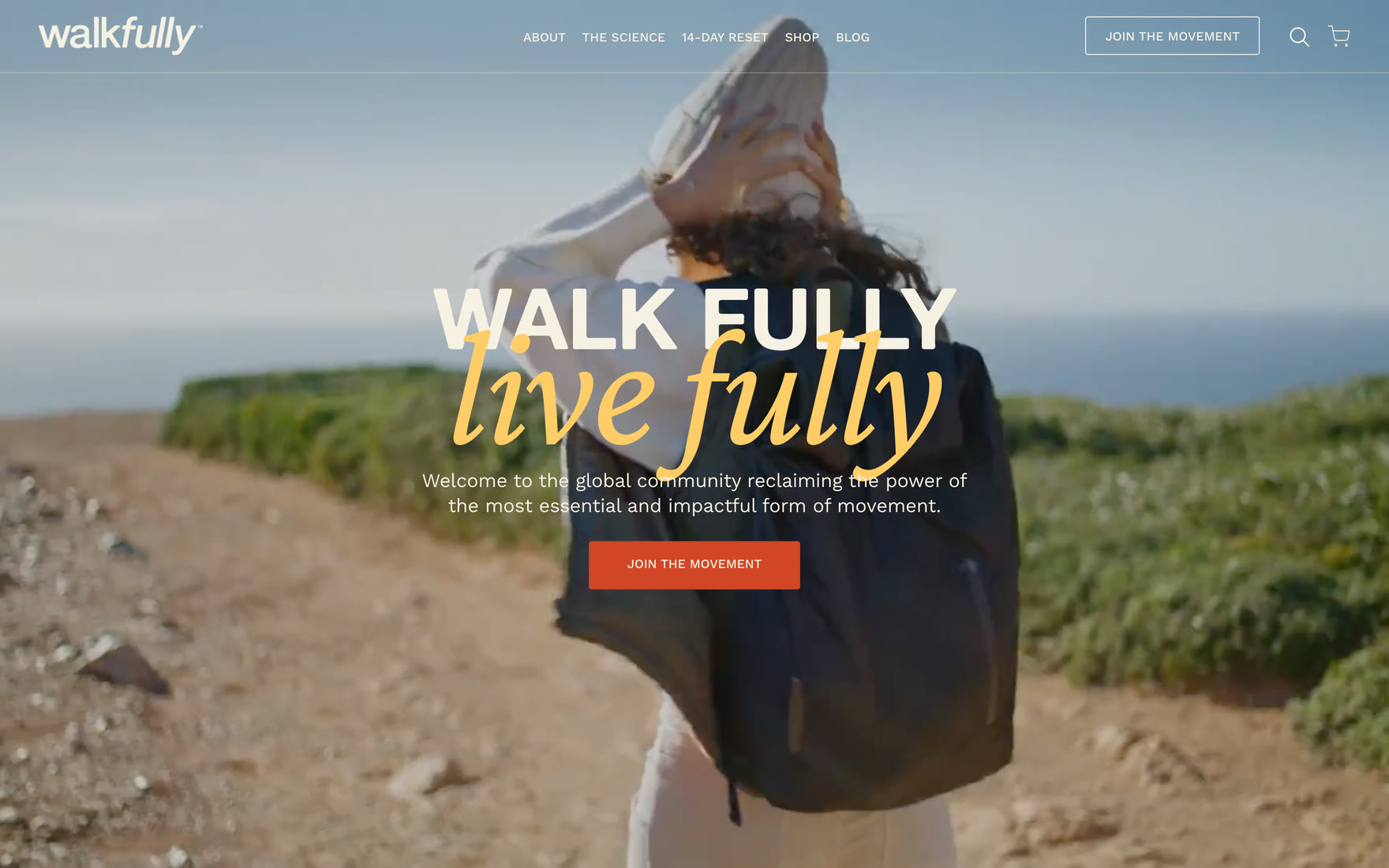
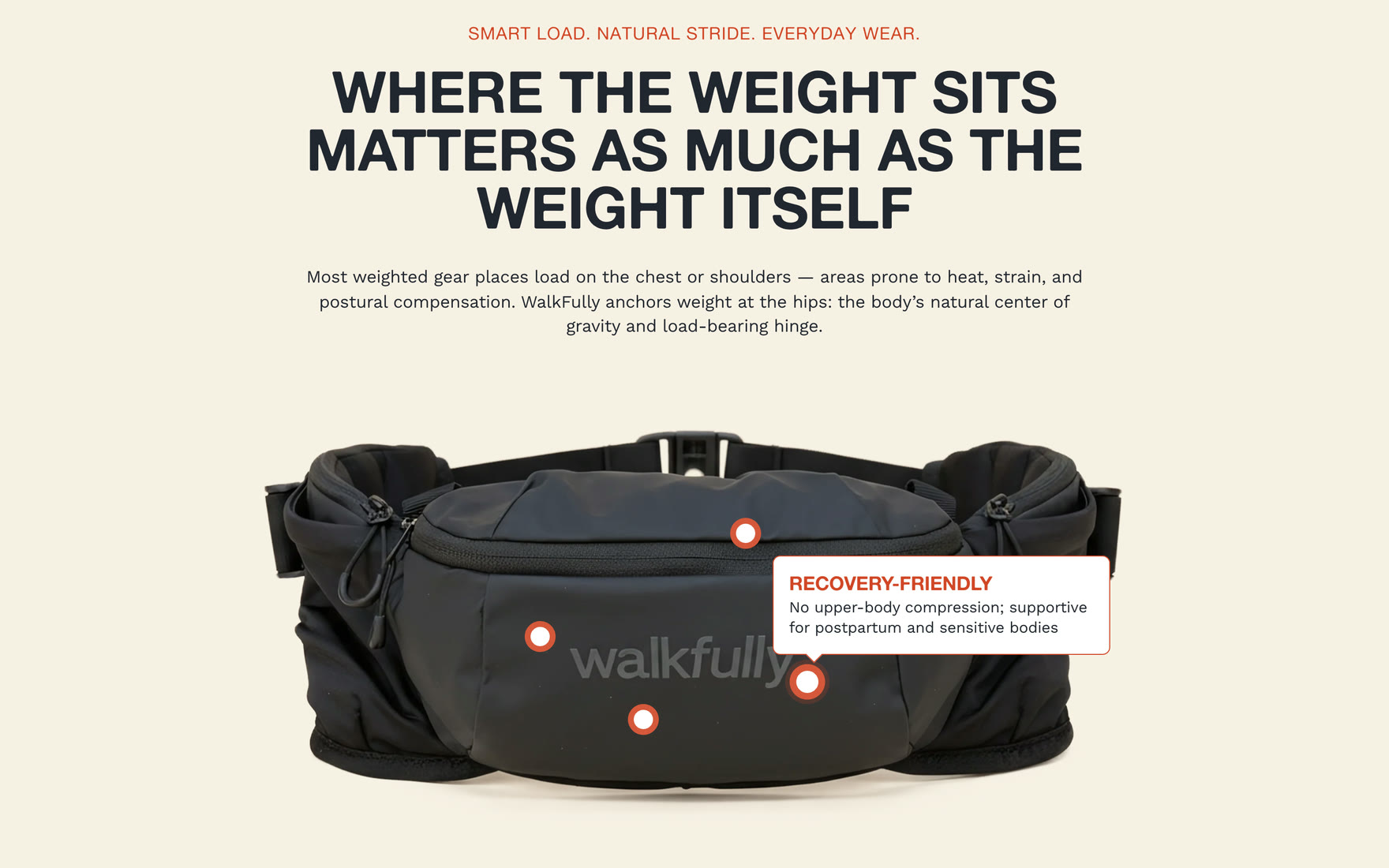
WalkFully makes weighted walking gear, hip-loaded rather than shoulder-loaded, positioned as an approachable alternative to rucking vests. It was founded by Christopher Gavigan, who co-founded The Honest Company, and launched in May 2026 with a founding advisory group that includes Martha Stewart, researcher Michael Easter and several clinicians.
Unlike the other Shopify work here, this store did not start from an empty theme. It began on Haven, a commercial base theme, and my job was everything built on top of it.
That came to 18 new sections, 9 snippets and 4 templates, roughly 19,000 lines added and 5,500 removed across 60 files. Built at Lumios Digital.
Why start from a base theme
Building a cart, a checkout path, faceted collections and account templates from nothing is weeks of work that produces something a customer has seen a thousand times. None of it differentiates a brand and all of it can go wrong.
Starting from a solid commercial theme buys that outright, and spends the budget where it actually moves the business. The tradeoff is that you are now working inside architecture somebody else designed, which is its own discipline.
The actual problem
Most people do not arrive knowing they want weighted walking gear. The category barely reads as a category, and the version of it that does have a name, rucking, carries a hardcore image that this brand is deliberately not selling. So the store has to teach before it can sell, and its authority rests on the research and the clinicians behind it rather than on specifications.
That is why everything I built sits outside commerce. An interactive explorer that walks someone through the product and the reasoning behind it. Science sections and field notes, so the evidence has somewhere to live. A journal, so the brand has something to say between purchases. A gallery of customers actually using the gear. And a page for the free fourteen day reset, the programme the brand launched with, which turns a first visit into a commitment before it turns into a sale.
The base theme sells the object. The layer on top is the argument for why anyone would want it.
Making the seam invisible
The failure mode when extending a purchased theme is obvious to anyone who has seen it: bolted-on sections that behave differently from everything around them, ignore the theme's settings conventions, and break the moment the base is updated.
New sections here use the base theme's own primitives rather than working around them: its block model, its scroll-animation attributes, its settings patterns. The result is a single coherent theme rather than two themes sharing a store, and a merchant editing content cannot tell which sections shipped with the theme and which were written for this brand.
Email capture, done directly
The signup modal talks to Klaviyo's client subscriptions API directly rather than through an app embed, with a reCAPTCHA token attached to each submission to keep bots out of the list.
Only public identifiers live in the theme. No private key is ever in code a browser can read, which is the mistake this integration most commonly ships with.
Also in the build
- Custom hero and product storytelling sections, the largest files in the project
- Science carousel and scroll-line animation for the education pages
- Field notes and marketplace picks article templates, with their own cards
- Team carousel, story sections and promotional banners
- Marketplace category browsing and platform cards
- Breadcrumbs, star and quote iconography, journal and blog cards
Status
Live and selling. Built at Lumios Digital between January and July 2026.